Why Lianliankan Keeps You Clicking: What Your Brain Does While Matching Pairs
Published October 28, 2026 · about 6 minutes
A round lasts two or three minutes and the rule fits in one sentence, yet your finger wants one more tap. What actually lets you breathe is not the pop sound when a pair clears. It is the rare feeling of a problem laid out clearly in front of you that definitely has a solution.
Scanning a board happens in two stages
Pick the single red ball out of a pile of green ones and it takes almost no time; your eye lands and the target pops out by itself. Ask for the one that is red and vertically striped and everything slows down. Colour no longer does the work, so you check items one at a time, and the more distractors on screen the slower it gets.
In 1980 Treisman and Gelade proposed feature integration theory, and that is exactly where the line falls: a single feature can be processed in parallel, a combination of features needs attention moved from item to item. Matching games sit on the second side. Two identical fruits are easy to spot, but they also have to be connected, so your gaze jumps cell by cell rather than sweeping the whole board.
That is also why people go quiet while playing. Attention is fully occupied by one concrete task, with nothing left over to chew on the sentence you failed to answer at lunch.
The two-turn rule is what makes it fun
If the rule were simply "two of the same and they vanish", any board would clear in a few taps. No difficulty, no satisfaction. Add the limit of two turns and the task changes from "find a pair" to "find a pair and find a route", and suddenly there is a difficulty curve.
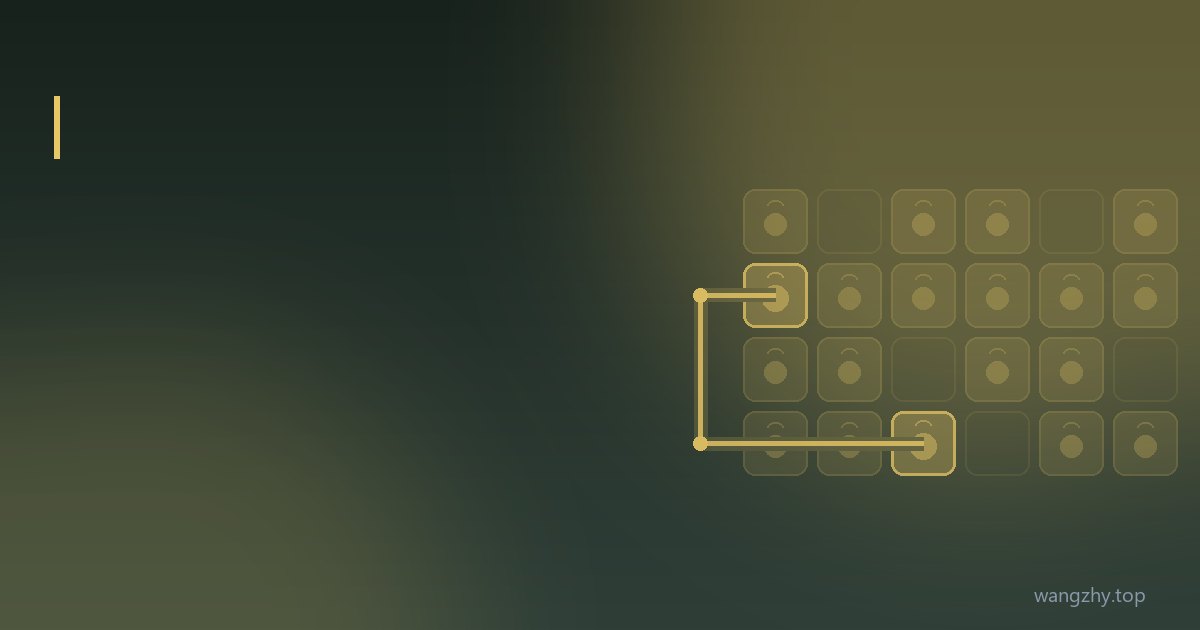
The cleverer half is that the route may run around the outside of the board. Boards that look sealed off often open up with one lap around the edge, which quietly turns "impossible" into "look again". That single rule is the most comfortable thing in the whole design.
Psychology calls the resulting state flow: when difficulty sits right at the edge of "I can do this, but it costs something", time thins out. Levels grow from 6x4 to 10x8, with more tiles, more kinds of fruit and less clock, keeping the task on that edge.
Clearing a pair delivers completion, not thrill
Every cleared pair is a closed loop: see the problem, find the solution, get confirmation. The fruit disappears and the sound plays. Most of a working day does not look like that. The report is on its fifth revision with no verdict, requirements keep moving, and plenty of tasks never have a moment that counts as finished.
So the relief here comes from certainty rather than stimulation. What hooks people is an uncertain reward, a slot machine where you never know if the next pull pays. A matching game is certain: do it right and something always happens. That is also why most people can stop after a few rounds. It is not stringing you along.
Why it costs far less than scrolling short videos
The trouble with short video is that the context changes every dozen seconds. You finish a clip and part of you is still in it, and coming back means warming up again, a cost known as attention residue. Half an hour of it leaves you feeling like you did nothing, yet empty.
In a matching game the context is always this board. The rules do not change, the goal is explicit, and there is a real ending: board clear, or time up. It leans on visual search and spatial judgement, not much on language or emotion, which is why you can play while listening to a podcast and cannot play while chairing a meeting. Whatever it does take, one attempt will show you.

How to spend three minutes without losing by it
Give yourself a closing condition first: stop when this level ends, not "one more round". The difference between those two sentences decides whether this is a break or procrastination.
For your eyes there is the widely repeated 20-20-20 habit: every twenty minutes, look at something twenty feet away for twenty seconds. A three-minute round sits at a natural boundary, so looking out of the window afterwards beats five rounds followed by rubbing your eyes.
Skip the round right before bed. A countdown is a pressure source, and the last few seconds are the tensest part, which is the wrong thing to bring into sleep. Three minutes of rain sound or white noise serves that slot better.
Treat the leaderboard as reference, not as a target. Restarting for two more levels changes what you are doing, and the tiredness is no longer in your eyes but in the insistence on getting up there.
When not to play
If your eyes are dry or your temples are tight, do not push through. What you need then is closed eyes and a long view, not another board. The same goes for a day with something that must ship: finish it first, otherwise these three minutes are stolen rather than earned, and you will come back more anxious than you left.
If you want to try, there is a fruit-themed Lianliankan on the site: eight levels, two hints per level, a countdown that settles the run, two or three minutes each, stoppable at any point. If you would rather change channels afterwards, browse the rest of the articles or go pop a sheet of bubble wrap.
Frequently asked questions
Does lianliankan actually train your eyes or your brain?
What it trains stays very close to the task itself: speed of visual search and quick judgements about whether a route connects. Transfer to other things is limited, and it will not incidentally improve your reading speed or memory. The honest framing is a three-minute low-load break, not a training tool.
Why do I always get stuck on the last pair or two?
The last tiles are usually the ones wedged in the middle, blocked even though there is empty space around them. They have the fewest usable routes. The practical approach is to clear edges and corners first and leave the middle for last, and use a hint instead of staring at one tile.
I cannot stop after one round. Is that too much slacking off?
It depends how you play. A round of two or three minutes with a clear ending and a settled score is a low-load break. Restarting over and over for a rank turns it into a task, and the tiredness is in the insistence rather than the eyes. Deciding to stop when this level ends works better than deciding to play one more.
Is it fine for children?
The rules are simple enough that recognising the pictures is all it takes, and there is no sign-up. What matters is viewing distance and duration: do not let the countdown become pressure, and have them look into the distance after ten minutes.