One Bead at a Time: Why Handwork Rests Your Brain Better Than Scrolling
Published October 20, 2026 · ~6 min read
Fuse beads look like the most pointless activity there is: press tiny plastic beads into a grid until a palm-sized picture appears, good for neither eating nor using. Yet people sit at it for an hour and stand up clearer-headed. This has very little to do with vague talk about crafts being soothing, and quite a lot to do with four concrete things.
An observation you may not like
What really tires you out is rarely "doing too much." It is "making too many judgments."
Unpack that. A day of physical work washes off in the shower. A day in an office chair, lifting nothing heavier than a laptop, leaves you hollowed out. The difference is not calories burned. It is how many decisions you made.
The same explains why scrolling leaves you more tired than before. People assume watching short videos means "not having to think," but it is the opposite. Every item asks for a micro-decision: keep watching or not, is this funny, swipe or stay. Each one costs almost nothing on its own. A few hundred of them in an hour is a different story. Your brain stays parked in a "pending verdict" state and never actually clocks out.
Psychology calls this arousal, and the curve is roughly an inverted U: too low and you drift, too high and you tighten up, and the comfortable band is in between. Scrolling keeps pushing arousal upward — the feed never stops offering new stimulus, so you stay braced to catch the next thing. Placing beads pushes it down into the lower-middle range: steady, without spikes.
Now look at the decision density of bead work. In a minute you might decide a handful of things: which cell this bead goes in, whether to switch colors, where the next row starts. Few decisions, but attention is on duty — hands moving, eyes searching, mind checking. All three engaged, none of them strained.
That is the first useful point: rest does not require doing nothing. It requires lowering decision density while keeping attention present. Genuine emptiness tends to slide back into the feed, because unattended attention gets grabbed by whatever is nearest.
What the grid really does: it turns "is this right?" into a yes/no
The most draining part of work is usually a fuzzy standard.
Is this plan good enough? Does the copy still feel off? What exactly does "let's refine it a bit" mean? None of these have definite answers, so you keep auditing yourself, knocking down your own drafts. That burns real energy while producing nothing.
Bead work is the exact inverse. The chart says what color belongs in this cell. Place it right and it is right; place it wrong and it is wrong. No "roughly fine." The standard is binary, and it is given from outside, so you never have to negotiate with yourself.
That sounds like it makes you stupider. What it actually does is take the judgment off your hands. You only execute; you do not evaluate.
More importantly, it is reversible. Wrong bead, pull it out, start again, at essentially no cost. Most real decisions are the opposite: the sent email, the signed contract, the sentence already spoken. Facing irreversible things, your nervous system braces. Facing something you can undo at any moment, it can finally let go.
This is common to all handwork, not just beads. Knitting, jigsaws, model kits — all of them are "clear standard plus undo button." What they share is not the material. It is the rule set.
Progress you can see, one bead at a time
One more thing gets badly underestimated: visible progress.
Most modern work is invisible. Three days of code and the interface looks the same. Five revisions of a plan and the folder holds more files, but "how much is done" stays unanswerable. You know you are busy. You do not know you are advancing.
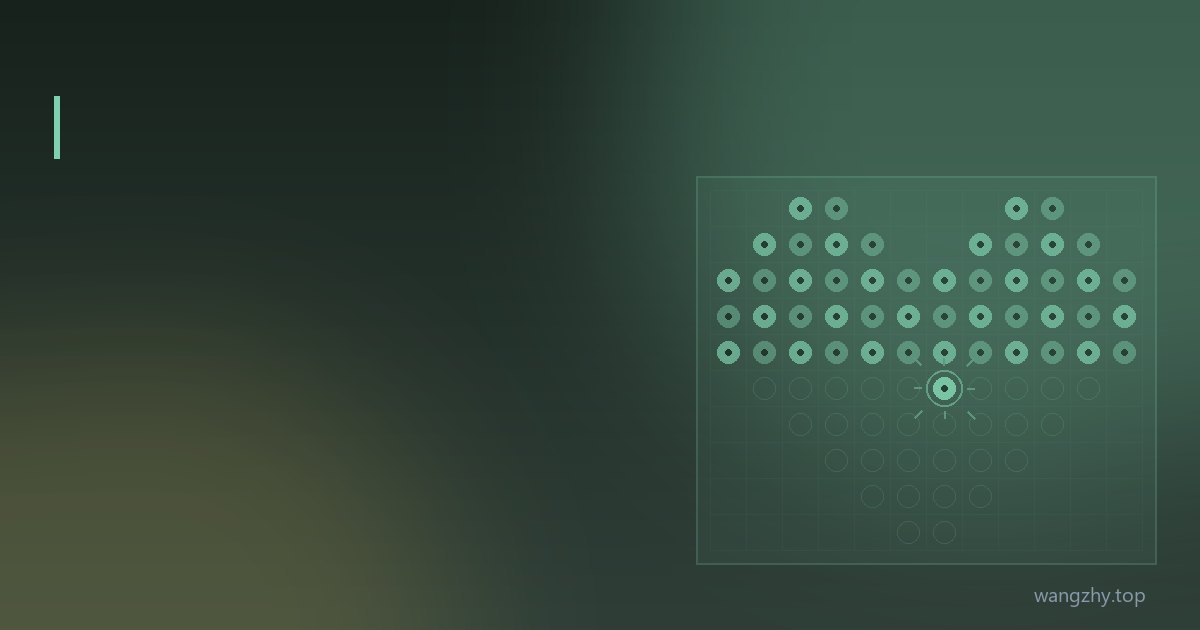
Bead work is a physical progress bar. How much of the grid is filled is one glance away. And the progress is continuous: every bead changes the picture a little, small enough not to tire you, definite enough that you never doubt it.
Immediate, visible feedback that requires nobody's sign-off is scarce in adult life. Most of our sense of accomplishment passes through someone else's hands first: the manager's approval, the client's acceptance, the dashboard going up. Here the feedback stays entirely yours.
So often the exhaustion is not from doing too much. It is from being unable to see what you did. Handwork fills exactly that gap — a small finished piece you can confirm on your own authority.
What the browser version loses, and what it keeps
An honest caveat: on a screen, bead work loses about half of itself.
Real beads have touch. The give of plastic between your fingers, the smell of it softening under an iron, the way the finished piece weighs less than expected. None of that survives on a screen.
What does survive is the aiming. Your finger has to land on one specific cell; the cursor has to travel to one specific bead and click. That fine placement is an anchor for attention in itself — you cannot precisely place beads and simultaneously rehearse tomorrow's meeting.
It also keeps the zero-cost undo, more completely than the physical version. Real beads have to be picked out one at a time. Here you click and they are gone.
So my read is that the browser version is not a substitute. It is a lighter cut — touch removed, but the three things that actually relax people intact: a clear standard, visible progress, and a free undo. For the gap between tasks, when you cannot get your hands on real materials, that is enough.
A warning: don't let it become polished procrastination
Handwork carries a quiet risk: it feels so good that it becomes a vehicle for avoidance.
The test is simple. Ask yourself: after a session, do I feel loosened up and able to face the thing, or do I think "just a bit more," and keep going until there is no time left for the real work?
The first is rest. The second is procrastination wearing better clothes — and it is harder to catch than scrolling, because it looks like productive activity and it even leaves you with an artifact. Avoidance with an output is respectable enough to fool you.
So give it a boundary: ten to twenty minutes in a gap, not something that can stretch indefinitely. Stopping mid-pattern is fine, arguably better — the unfinished patch gives you a reason to come back.
When to reach for it
When work stalls and your thinking knots up, this beats scrolling. It occupies your hands without occupying your head, leaving the background process running on the stuck problem. Several times I have come back from a filled section and found the answer waiting — though that probably has less to do with beads than with simply stepping away from the screen.
An hour before bed works too, provided you skip the complicated patterns. Arousal stays low; unlike competitive games, it will not wind you up.
But if there is something you know you should be doing and are simply avoiding, skip it. In that state any "meaningful-looking" activity can become an entry point for avoidance, and handwork is especially dangerous because its positive feedback arrives so promptly.
In the end, beads do not cure fatigue. They address the feeling of losing control. After a day steeped in open questions and irreversible calls, you need a short stretch where everything has a definite answer, every mistake can be undone, and every increment is visible. That is all it offers. It is also enough.
Frequently asked questions
Do fuse beads actually reduce stress, or does it just look busy?
The reduction is real, but the mechanism is not distraction. It works through three specific things: low decision density, a binary standard, and visible progress. If you are rearranging beads while still rehearsing the unfinished task, much of the effect disappears, because this mechanism depends on your attention actually being here.
Why do I get bored after a while?
Usually a difficulty mismatch. Too simple and one color runs the whole pattern with nothing to judge, so attention drifts. Too complex and you spend your time recounting cells and getting frustrated. The comfortable band is the one where you need to glance at the chart but do not need to think hard about it.
How different is the browser version from the real thing?
It is missing about half. Touch is essentially gone: the resistance of a bead between your fingers, the smell of plastic under an iron, the weight of the finished piece. What survives is the aiming and the free undo. Good enough as a light substitute between tasks, but not the same as real materials.
How long should one session be?
Ten to twenty minutes. Stopping halfway is fine, arguably better — the unfinished patch gives you a reason to come back, while finishing it all in one go tends to use up the novelty. Also skip complex patterns near bedtime; arousal stays low, but deep absorption can still postpone sleep.